Let’s start with something most people don’t realise about small laundry rooms—they’re rarely difficult because of their size.
More often than not, they struggle because there’s no real system behind them.
A room that’s meant to wash, dry, fold, sort, store, and sometimes even house cleaning supplies can quickly start working against you when the layout isn’t thought through. Add wasted vertical space, surfaces that slowly collect clutter, and storage that grows without a clear plan… and even a decent-sized laundry room can start to feel cramped.
So the issue usually isn’t square footage.
It’s workflow. It’s access. It’s what happens when a hard-working space is treated more like a storage room than a system.
The good news? Small laundry rooms can actually work incredibly well—sometimes better than larger ones—when every shelf, surface, and storage decision has a clear purpose.
So instead of thinking of it as somewhere to squeeze things in, it helps to think of it as an efficient utility zone—one designed to support movement, organisation, and everyday routines without friction.
That’s exactly what this post is about.
We’ll go through a set of practical dos and don’ts that help you improve workflow, storage, cleanliness, and speed—so your small laundry room doesn’t just fit more… it works better.
1. DO: Design for Laundry Sorting at Entry Point
In a well-designed small laundry setup, efficiency starts before anything even enters the room.
Because in a compact space, the moment unsorted clothes, overflowing baskets, and mixed loads start arriving all at once, the room immediately has to work harder than it should.

Design: @lindseyblackinteriors 📷: @josephgbradshaw
The smarter approach is to make sorting part of the system before laundry gets there.
A few ways to approach it:
- Pre-sort laundry outside the room, so loads arrive ready to wash
- Reduce mixed baskets and last-minute sorting decisions inside the space
- Use hampers or sorting points in bedrooms, bathrooms, or nearby utility areas to spread the system across the home

Design: nancytaylorstudio 📷: charlotteleaphotography
When laundry enters the room already organised, the space instantly feels lighter, faster, and easier to manage.
DON’T: Bring Unsorted Laundry Into the Room
This is where small laundry rooms can lose efficiency before the task even begins.
Mixed loads, loose clothing, and baskets waiting to be sorted create immediate decision-making in a space that usually doesn’t have much room to spare.
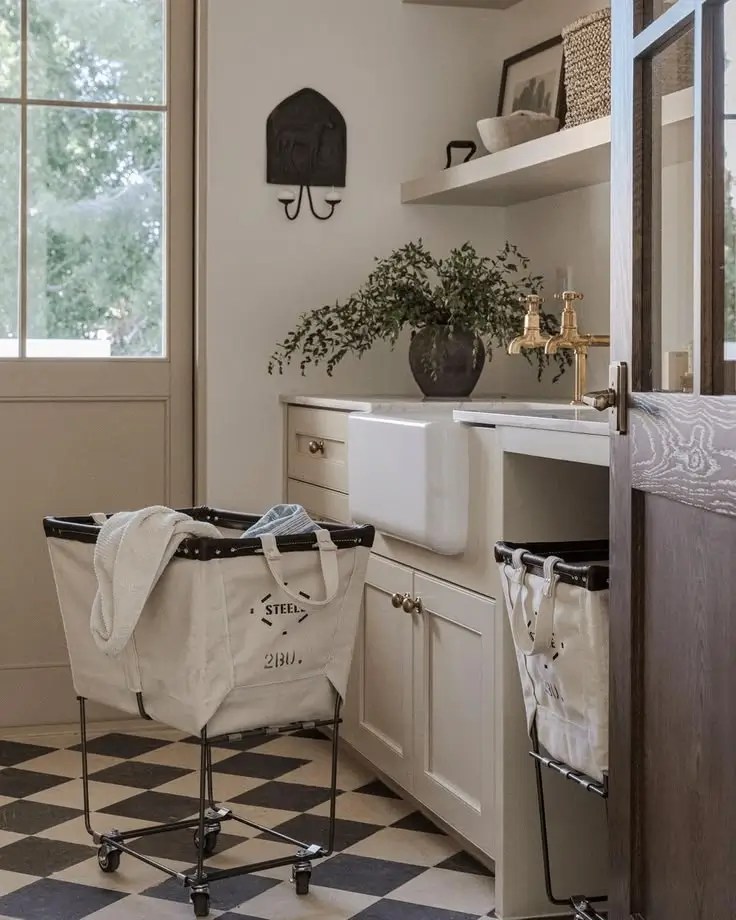
Image: admagazine
It adds clutter before any actual washing has started, interrupts workflow, and quickly makes the room feel busier than it needs to.
And because everything is happening in such a compact footprint, that extra volume is felt almost instantly.
A small laundry room works best when it receives ready-to-process loads—not problems to solve.
2. DO: Prioritise Workflow Over Everything Else
In a small laundry room, the layout should follow the process—not the other way around.
Laundry isn’t just one task, it’s a sequence: wash, transfer, dry, fold, store. And when that sequence is supported by the layout, everything feels quicker, easier, and far less frustrating.

Image: stofferhome
Even in a compact space, a well-planned flow can make the room feel much more efficient than its size suggests.
A few ways to approach it:
- Arrange the space to follow a clear wash → dry → fold → store sequence
- Position appliances so they feel logically connected, not scattered
- Keep detergents, baskets, and everyday items within easy reach of where they’re used

Image: potterybarn
When the flow makes sense, the whole room starts working with you instead of against you.
DON’T: Scatter Functions Across the Room
This is where small laundry rooms quickly start to feel inefficient.
If washing happens in one corner, drying somewhere else, folding wherever there’s space, and storage is tucked away out of reach—you end up moving back and forth far more than necessary.

🏡: blesserhouse
It breaks the natural rhythm of the task and adds friction to something that should be straightforward.
And in a small space, that extra movement is felt immediately.
Instead of feeling streamlined, the room starts to feel disjointed and harder to use than it needs to be.
3. DO: Stack Appliances to Free Floor Space
In a small laundry room, floor space is one of your most valuable resources—so the more you can build upwards, the better the room tends to work.
Stacking your washer and dryer is one of the simplest ways to instantly free up usable width. And in a compact utility space, that extra floor area can make room for things that often matter more day to day—storage, a folding surface, or simply easier movement.

Design: housenine
It’s one of those decisions that can quietly transform how the whole room functions.
A few ways to approach it:
- Stack your washer and dryer where the layout and appliance type allow
- Use proper stacking kits to keep everything secure and stable
- Make sure controls stay comfortably accessible, so the setup remains practical to use

Image: illiekteam
When appliances work vertically instead of horizontally, the room instantly feels more efficient.
DON’T: Place Appliances Side-by-Side If Space Is Tight
This is where small laundry rooms can lose valuable space before the design has even started.
In narrow layouts, side-by-side appliances can consume most of the room’s usable width—leaving very little space for storage, folding, or even comfortable movement.

Design: jennasuedesign
It also limits what you can do above or around them, because the room starts feeling full far too early.
And once circulation becomes tight, everyday tasks quickly feel more awkward than they need to.
In smaller laundry rooms, giving up floor width too soon often limits everything else that comes after.
4. DO: Maximise Wall-Mounted Storage
In a small laundry room, the walls often have far more potential than the floor.
And yet this is one of the most overlooked opportunities in compact utility spaces.

Design: Anissa Zajac
When storage moves upwards, the room instantly feels lighter, easier to move through, and much better organised. It also keeps your main working zones clear—which matters in a space where every surface and every step counts.
A few ways to approach it:
- Install upper cabinets above appliances to make use of otherwise wasted vertical space
- Add rails, hooks, or mounted holders for things like ironing boards, spray bottles, brushes, or laundry tools
- Use open shelves only for daily essentials, so they stay practical rather than becoming visual clutter

Design: Stritt Design & Construction 📸: Simon Whitbread
When storage lives on the walls instead of the floor, the whole room starts working much harder.
DON’T: Rely on Floor Units Alone
This is where small laundry rooms can start feeling crowded very quickly.
Freestanding shelves, storage towers, baskets, and floor cabinets might seem practical at first—but in a compact space, they quickly eat into the very area you need most for movement and everyday tasks.
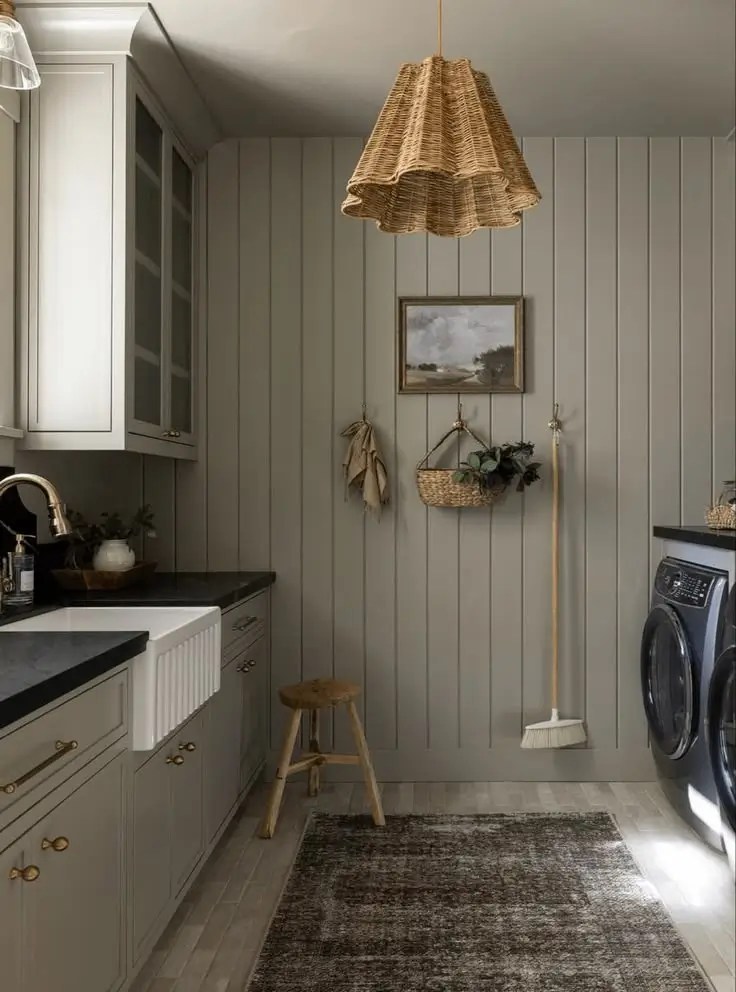
Design: eyeforpretty 📷 jessicabrydsonphotography
They also add visual weight at eye level and floor level, which can make the room feel heavier and more cramped than it actually is.
And once the floor starts filling up, the space often feels smaller—even if the square footage hasn’t changed.x
In a small laundry room, the more storage you can lift off the floor, the calmer and more usable the room becomes.
5. DO: Keep Laundry Sorting Hidden and Built-In
In a small laundry room, sorting works best when it feels like part of the architecture—not something added afterwards.
Because once baskets start living on the floor, moving from corner to corner, or filling up wherever there’s space, the room can start feeling cluttered surprisingly quickly.

Design: osborninteriors
The smarter approach is to build sorting directly into the room, so organisation happens naturally as part of the workflow.
A few ways to approach it:
- Use pull-out hampers or integrated bins that sit neatly within cabinetry
- Build in separate sections for whites, colours, delicates, or towels, depending on how you wash
- Keep dirty laundry behind closed storage wherever possible, so the room stays visually calm

Design: nancytaylorstudio 📷: charlotteleaphotography
When sorting is built in rather than improvised, the entire space feels cleaner, faster, and much easier to stay on top of.
DON’T: Leave Laundry Baskets Visible
This is one of the quickest ways for a small laundry room to feel permanently mid-task.
Even when baskets are organised, having them constantly on display adds immediate visual clutter in a space that usually doesn’t have much room to spare.
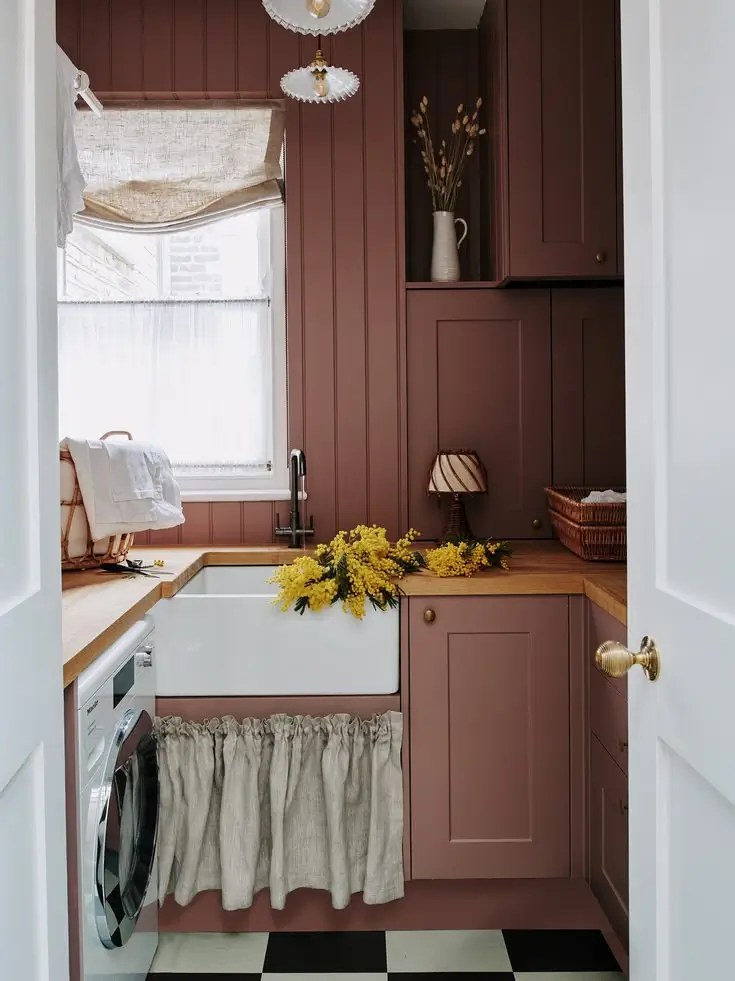
Design: Natasha Howard 📸: Christopher Horwood
They also tend to migrate—one by the machine, one by the door, one waiting to be emptied—which quickly breaks the sense of order.
And because they often sit directly on the floor, they interrupt clean lines and make the room feel busier than it really is.
In a small laundry room, the more laundry you can hide, the calmer and more finished the space feels.
6. DO: Think Vertical Drying Solutions
In most small laundry rooms, drying is where space disappears the fastest.
Washing and storage are usually planned for—but drying often gets added afterwards, which is why so many compact laundry rooms end up with racks in the middle of the floor or clothes hanging wherever there’s room.

Design: dalrymplestudio 📸: dean.hearne
The smarter approach is to make drying part of the design from the very beginning—and in small spaces, that usually means thinking vertically.
A few ways to approach it:
- Install ceiling-mounted drying racks that can be lifted away when not in use
- Use foldable wall-mounted airers that open only when needed
- Add retractable drying lines for occasional overflow, delicates, or air-drying

Design: nancytaylorstudio 📷: charlotteleaphotography
When drying moves upwards—or disappears completely when not in use—the whole room will instantly feel more usable.
DON’T: Use Floor Drying Racks Permanently
This is one of the quickest ways for a small laundry room to lose its flow.
A floor-standing drying rack might work temporarily—but when it becomes a permanent part of the room, it starts claiming some of the most valuable space you have.

Design: whittneyparkinson
It blocks movement, interrupts access to appliances and storage, and makes even a well-planned layout feel like it’s constantly mid-task.
It also adds visual clutter in a room that usually doesn’t have much breathing space to begin with.
In a small laundry room, drying solutions work best when they do their job—and then quietly disappear.
7. DO: Plan for Door Clearance and Access
In a small laundry room, it’s not just about what fits—it’s about what actually opens, pulls out, and moves properly once everything is installed.

Design: Jessica Helgerson
Washer doors, dryer doors, cabinet fronts, pull-out hampers, drawers… they all need room to function. And in compact spaces, this often gets overlooked until the room is already built.
A layout might look efficient on paper, but if doors clash or drawers can’t open fully, everyday tasks quickly become frustrating.
A few ways to approach it:
- Make sure washer and dryer doors can open fully without hitting walls, cabinetry, or each other
- Allow clear pull-out space for drawers, baskets, and integrated storage
- Check that doors, handles, and moving elements don’t clash when multiple things are open at once

When access is planned properly, the room feels effortless to use—not something you have to work around.
DON’T: Design Tight “Paper Layouts”
This is one of the most common mistakes in small laundry rooms.
Everything may technically fit on a floor plan—but real life is different. Doors open. Baskets pull out. People bend, turn, carry loads, and move around with full hands.

Design: blancmarineliving 📸: anniefafardphotographe
And if none of that has been considered, even a beautiful layout can become awkward very quickly.
You end up turning sideways to load the machine, moving baskets just to open a cupboard, or closing one thing before you can access another.
In a small laundry room, a layout that works in theory isn’t enough—it needs to work effortlessly in everyday use.
8. DO: Plan for Ventilation and Moisture Control
Small laundry rooms generate a surprising amount of heat, steam, and humidity in a very confined space.
And because many utility rooms are tucked into internal corners, cupboards, basements, or narrow side rooms, airflow often gets overlooked until moisture starts becoming a problem.

Good ventilation isn’t just about comfort—it’s about protecting the room, the appliances, and everything around them over time.
A few ways to approach it:
- Ensure an extractor fan or openable window provides consistent airflow where possible
- Use moisture-resistant paints, cabinetry, and finishes that can handle everyday humidity
- Leave a small amount of air circulation around appliances, rather than pushing everything tightly into corners or enclosed cabinetry

Design: maisonstudios
When airflow is built into the design, the room stays fresher, cleaner, and much easier to maintain.
DON’T: Ignore Humidity Build-Up
This is one of those problems that often starts quietly—but gets expensive over time.
When moisture has nowhere to escape in a small laundry room, it begins to build up on walls, ceilings, cabinetry, and behind appliances.
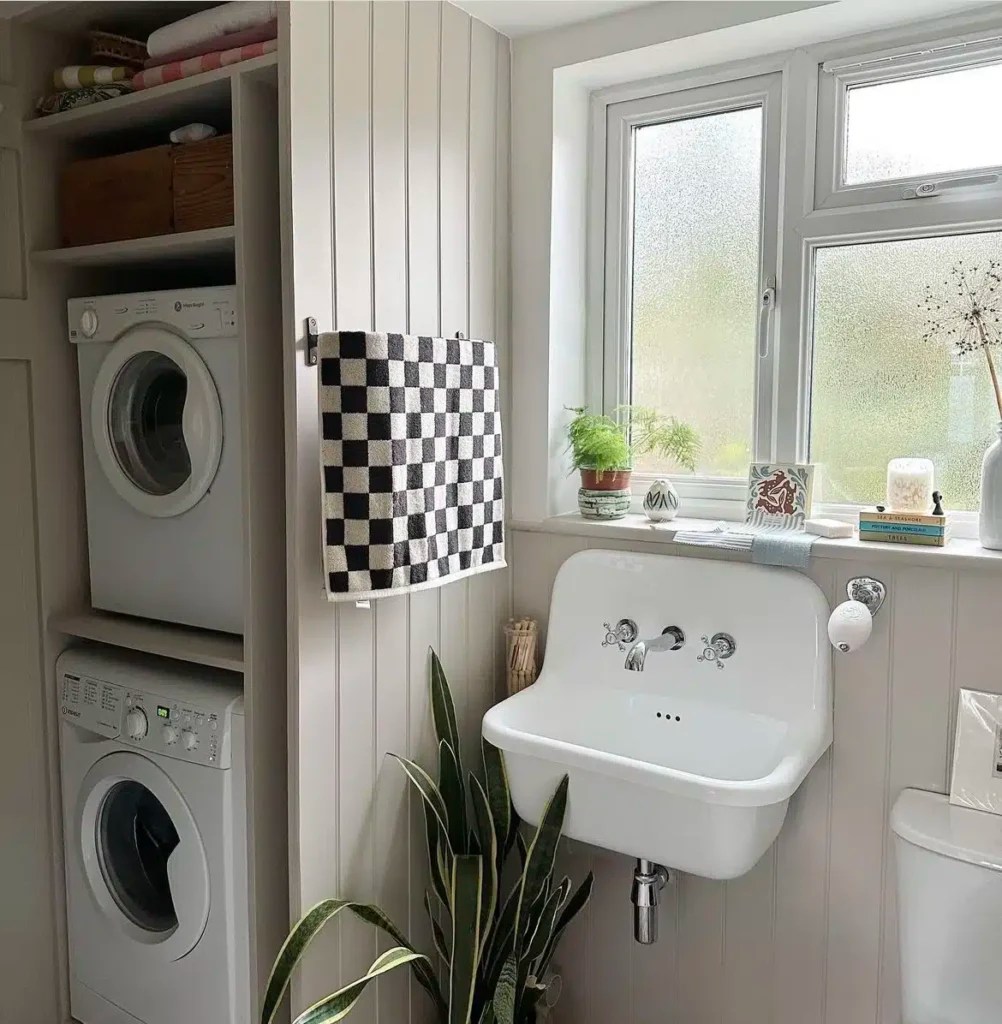
Over time, that can lead to condensation, damp smells, mould risk, and finishes that start wearing far sooner than they should.
And even before any visible damage appears, the room can start feeling heavier, stuffier, and less pleasant to spend time in.
In a small laundry room, airflow isn’t an extra—it’s part of what keeps the space working properly.
9. DO: Add Task Lighting Where Needed
In a small laundry room, lighting isn’t about atmosphere—it’s about making the space genuinely easy to use.
These rooms often sit in areas with limited natural light, and because so many tasks happen close to surfaces—sorting, folding, stain treating, reading labels, measuring detergent—good visibility matters more than people realise.

Styling: Annalese Hay, Photography: Kate Enno for homebeautiful
A single light might brighten the room, but it doesn’t always light the places where the work actually happens.
A few ways to approach it:
- Add under-cabinet lighting above counters so folding, sorting, and product prep stays shadow-free
- Use focused lighting over sinks, stain-treatment areas, or work surfaces where detail matters
- Make sure there are no dark corners around appliances, storage, or lower work zones

Image: fireclaytile
When light follows the task, the whole room instantly feels more functional and easier to work in.
DON’T: Rely on One Ceiling Light
This is one of the most common reasons small laundry rooms feel harder to use than they should.
A single overhead light might technically light the room—but it often leaves worktops, machine fronts, shelving, and corners sitting in shadow.
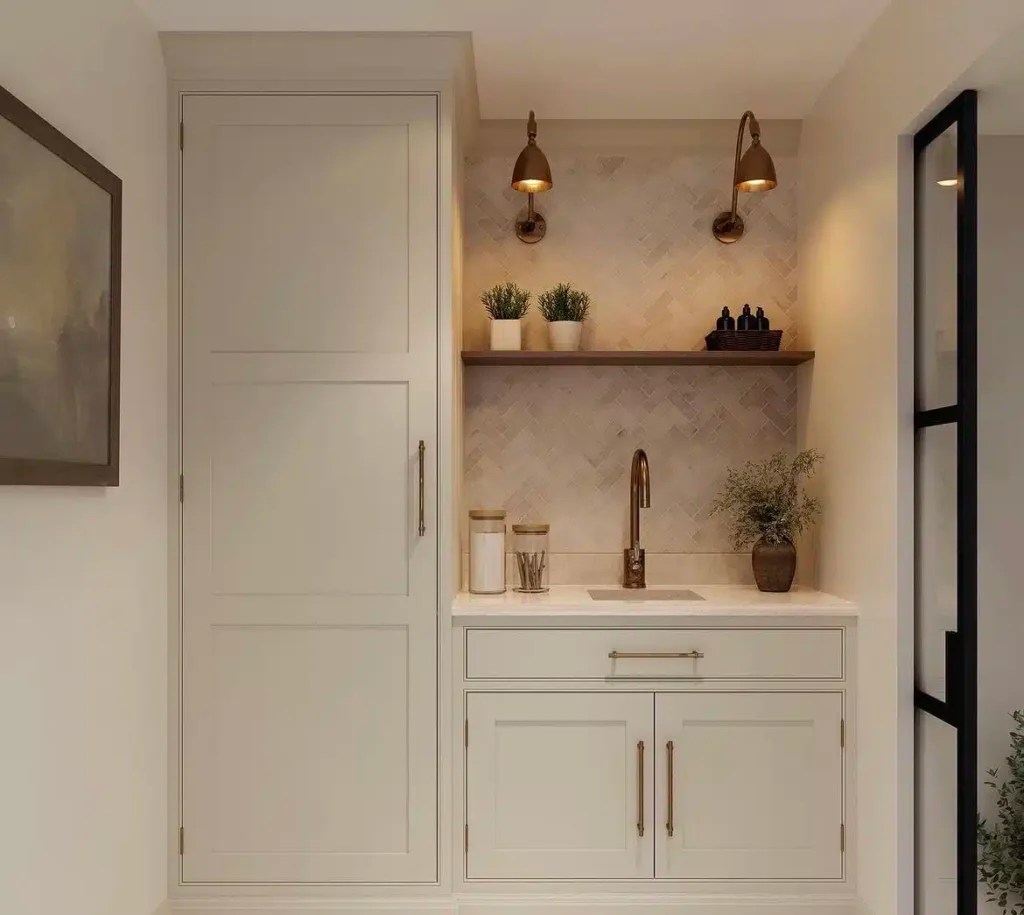
Design: Holly Oak House
It also creates very flat lighting, which makes the space feel less precise and more purely functional than it needs to.
And in a room where you’re often reading labels, spotting stains, sorting fabrics, or folding clothes, poor visibility quickly becomes frustrating.
In a small laundry room, lighting should support the work—not just fill the room.
10. DO: Design for Speed, Not Just Storage
In a small laundry room, efficiency matters more than excess storage.
It’s easy to focus on fitting everything in—but the real measure of a good layout is how quickly and smoothly everyday tasks can be completed. When everything is within reach and the flow feels natural, the room stops feeling like a chore and starts feeling effortless to use.

Design: briahammelinteriors
A few ways to approach it:
- Reduce movement between washing, drying, folding, and storing as much as possible
- Keep frequently used items (detergent, baskets, sprays) within immediate reach of where they’re needed
- Design a clear, logical sequence of use so tasks flow without interruption

🏡: blesserhouse
When the room is designed for speed, even a small space feels surprisingly capable.
DON’T: Over-Engineer the Layout
This is where small laundry rooms can quietly become less functional than they need to be.
When too many zones are introduced, or when storage and tasks are overly separated, the room starts to feel more complicated than necessary.

Design & Styling: qdesignseattle 📸: sumairaamberphoto
Instead of simplifying the process, you end up adding extra steps—moving between areas, opening multiple storage points, or working around a system that feels over-designed.
And in a small space, that friction is felt immediately.

Design studioduggan 📸 sarahgriggs
A laundry room should make everyday tasks easier, not more structured than they need to be.
11. DO: Choose Paint Colours and Finishes That Work Hard
In a small laundry room, colour isn’t just about how the space looks—it affects how clean, calm, and easy the room feels to live with day to day.
Because this is a room that deals with moisture, detergents, lint, heat, and constant use, your paint colours and finishes need to do more than look good. They need to handle real life while helping the space feel bright, cohesive, and easy to maintain.

Design: amandabockdesign
And because many laundry rooms have limited natural light, the right finish can make just as much difference as the colour itself.
A few ways to approach it:
- Choose light, tonal, or colour-drenched paint colours that help the room feel connected rather than visually broken up
- Use satin, eggshell, or other wipeable paint finishes that can handle moisture, splashes, and everyday cleaning
- Coordinate cabinetry, walls, and trim within a similar palette, so the room feels calm and visually continuous

Image: stofferhome
The goal isn’t necessarily “lighter”—it’s choosing colours and finishes that feel durable, cohesive, and easy to live with.
DON’T: Choose Paint Colours or Finishes Without Thinking About Maintenance
This is where small laundry rooms can start to feel busier—and harder to keep looking good—than they need to.
Sharp colour contrasts, overly busy finishes, or paints that mark easily can visually break up an already compact space and make everyday wear feel much more obvious.

Chris Warnes for House Beautiful
And in a room that regularly deals with dust, lint, moisture, and cleaning products, finishes that show every scuff, splash, or fingerprint can quickly become frustrating.
Dark colours can absolutely work here—even beautifully—especially in a tonal or colour-drenched scheme. But in small laundry rooms, cohesion, durability, and practicality usually matter far more than contrast for contrast’s sake.
You’ll Also Like: 20 Best Paint Colours for Small Laundry Rooms
Also Worth Reading: 10 Dark & Moody Paint Colors for Laundry Room
12. DO: Edit Ruthlessly (Even in Utility Spaces)
In a small laundry room, clutter builds faster than almost anywhere else in the home.
It’s not usually one big decision—it’s the gradual accumulation of spare bottles, half-used products, random baskets, things waiting to be put away “later.” And because it’s a utility space, it often gets treated as temporary storage without much thought.

Design, build & install holly-oak-house
But the more disciplined you are here, the better the room works day to day.
A few ways to approach it:
- Keep only active-use items in the room, not everything you own
- Make a habit of leaving surfaces completely clear when tasks are finished
- Store bulk supplies or seasonal items elsewhere, and rotate them in as needed
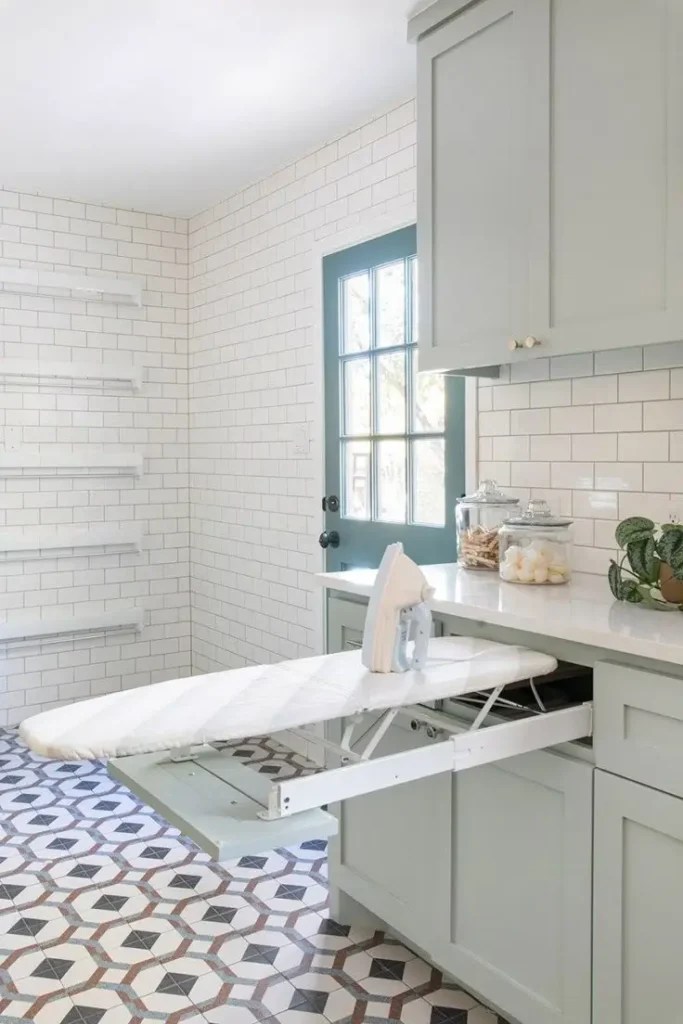
📸: Avery Nicole
When the room is edited properly, it stays functional, easy to maintain, and far less overwhelming to use.
DON’T: Treat It as a Dumping Zone
This is where small laundry rooms quietly lose all sense of order.
Because it’s a “back-of-house” space, it’s easy for it to become the default place for anything that doesn’t have a home elsewhere—old bottles, spare towels, broken baskets, random cleaning supplies.
Over time, that build-up reduces efficiency, makes everything harder to find, and turns a working space into a storage catch-all.
And once that happens, even simple tasks feel more frustrating than they should be.
A small laundry room works best when it stays intentional—not overloaded with everything else the house doesn’t want to deal with.

It’s a wrap on this one—and hopefully you’ve picked up a few ideas you can actually take away and use in your own space.
Small laundry rooms don’t usually need a full overhaul. More often, it’s a few thoughtful tweaks that start to change how the whole room feels and functions day to day.
If you enjoyed this and want more simple, design-led ideas like this, you can subscribe to my blog and I’ll send the latest posts straight to your inbox.
See you in the next one.
P.S.Working Through a Small Home, One Room at a Time?
You’re in the right place.
This post is part of my Small Space Dos & Don’ts series—simple, design-led guides for making compact rooms feel calmer, smarter, and much easier to live in.
You might want to read next:
Small Kitchen Design Dos & Don’ts
Small Living Room Design Dos & Don’ts
Small Bedroom Design Dos & Don’ts
Small Bathroom Design Dos & Don’ts

Leave a Reply